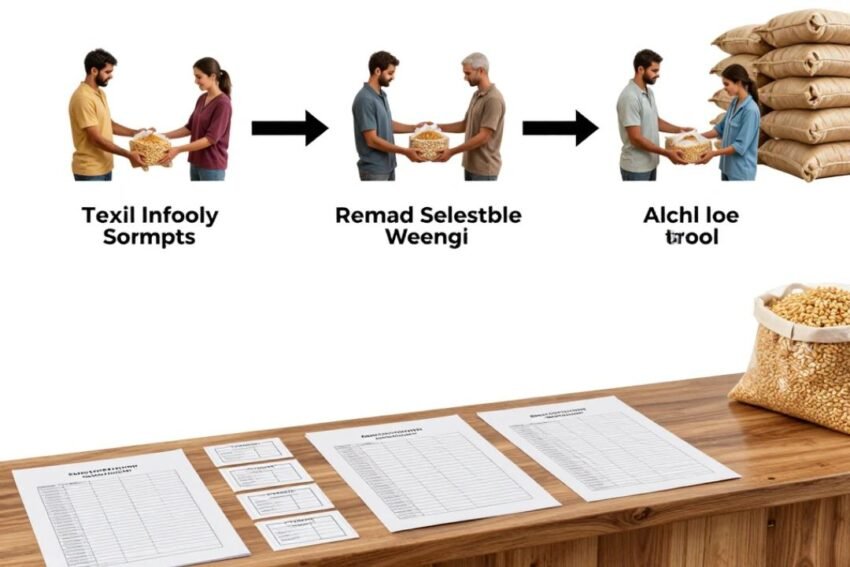
The Public Distribution System (PDS) is one of India’s most significant food security programs. It ensures that eligible households receive essential food grains and other subsidized commodities through a nationwide network of Fair Price Shops (FPS). The system plays a vital role in reducing hunger, supporting low-income families, and improving food security across both rural and urban areas.
Over the years, the Public Distribution System has evolved with digital reforms, Aadhaar authentication, electronic Point of Sale (ePoS) machines, and online ration card services. These improvements have made the system more transparent, efficient, and accessible.
In this comprehensive guide, you’ll learn how the Public Distribution System works, its benefits, different types of ration cards, eligibility criteria, required documents, the application process, and frequently asked questions.
What is the Public Distribution System (PDS)?
The Public Distribution System (PDS) is a government-operated food distribution network that supplies essential food grains and selected commodities to eligible households at subsidized prices.
The system is jointly managed by the Central Government and State Governments. The Central Government procures food grains, while state governments identify beneficiaries, issue ration cards, and distribute food through licensed Fair Price Shops.
The main purpose of the Public Distribution System is to ensure that economically weaker families have access to affordable food throughout the year.
Objectives of the Public Distribution System
The Public Distribution System has several important objectives.
These include:
- Providing affordable food grains to eligible families.
- Strengthening national food security.
- Reducing hunger and malnutrition.
- Supporting economically weaker sections.
- Stabilizing food prices.
- Maintaining buffer food stocks.
- Assisting vulnerable households during emergencies.
- Promoting social welfare and inclusive development.
The program continues to play an essential role in India’s welfare framework.
How the Public Distribution System Works
Understanding how the Public Distribution System works helps beneficiaries make better use of the scheme.
1. Procurement of Food Grains
The Government purchases food grains such as rice and wheat from farmers at the Minimum Support Price (MSP). This helps protect farmers while ensuring sufficient food stocks.
2. Storage of Food Grains
After procurement, food grains are stored in government warehouses managed by authorized agencies before being distributed to states.
3. Allocation to States
The Central Government allocates food grains to different states based on the number of eligible beneficiaries and government policies.
4. Distribution Through Fair Price Shops
State governments distribute food grains through licensed Fair Price Shops (FPS), where eligible ration card holders collect their monthly entitlement.
5. Beneficiary Authentication
Many states now use Aadhaar-based verification and electronic Point of Sale (ePoS) devices to verify beneficiaries before food grains are issued.
6. Digital Monitoring
Modern technology enables governments to monitor food movement, stock availability, and distribution in real time, improving transparency and reducing leakages.
Benefits of the Public Distribution System
The Public Distribution System offers numerous benefits to eligible households.
Affordable Food Grains
Rice, wheat, and other food grains are provided at subsidized prices, making them affordable for low-income families.
Improved Food Security
Regular distribution of food grains helps ensure that families have access to basic food throughout the year.
Financial Savings
Subsidized food reduces household expenses, allowing families to spend more on education, healthcare, and other essential needs.
Nutritional Support
Many states distribute fortified food grains, which help improve nutritional outcomes for beneficiaries.
Emergency Assistance
During natural disasters, pandemics, or economic crises, the Public Distribution System helps ensure uninterrupted food supplies.
Digital Convenience
Online services allow applicants to apply for ration cards, update beneficiary information, and track applications more easily.
Types of Ration Cards
Ration cards are issued based on eligibility and state government policies.
Priority Household (PHH) Card
Priority Household cards are issued to eligible families covered under the National Food Security Act (NFSA). Cardholders receive subsidized food grains every month.
Antyodaya Anna Yojana (AAY) Card
The AAY card is intended for the poorest households. Eligible families receive higher quantities of subsidized food grains compared to other categories.
State-Specific Ration Cards
Several state governments also issue additional ration card categories based on local welfare programs and eligibility rules.
Eligibility for the Public Distribution System
Eligibility varies slightly across states but generally depends on government guidelines.
Eligible applicants may include:
- Indian citizens.
- Economically weaker households.
- Low-income families.
- Priority households under the National Food Security Act.
- Antyodaya Anna Yojana beneficiaries.
- Other eligible categories recognized by state governments.
Applicants should always verify the latest eligibility criteria issued by their respective state authorities.
Documents Required
Applicants generally need the following documents:
- Aadhaar Card
- Identity proof
- Address proof
- Passport-size photographs
- Family details
- Mobile number
- Income certificate (if applicable)
- Existing ration card (for updates or transfers)
Providing complete and accurate documents helps speed up verification.
How to Apply for a Ration Card
The application process has become much easier with online services.
Step 1
Check your eligibility according to your state’s guidelines.
Step 2
Collect all required documents.
Step 3
Complete the application form with accurate information.
Step 4
Upload or submit the required documents.
Step 5
Complete identity verification if requested.
Step 6
Submit your application.
Step 7
Save your acknowledgement or application number.
Step 8
Track your application status until it is approved.
One Nation One Ration Card (ONORC)
The One Nation One Ration Card (ONORC) initiative enables eligible beneficiaries to receive their subsidized food grains from any Fair Price Shop across India.
This initiative is especially beneficial for migrant workers who move between states for employment, ensuring uninterrupted access to food benefits.
Digital Reforms in the Public Distribution System
Technology has significantly improved the efficiency of the Public Distribution System.
Important digital reforms include:
- Online ration card applications.
- Aadhaar authentication.
- Electronic Point of Sale (ePoS) devices.
- SMS notifications.
- Online grievance redressal.
- Digital beneficiary records.
- Online application tracking.
- Improved stock monitoring.
These reforms have increased transparency and reduced irregularities.
Common Reasons for Application Rejection
Applications may be rejected because of:
- Incorrect personal information.
- Missing documents.
- Duplicate applications.
- Invalid address proof.
- Incomplete forms.
- Failure to meet eligibility requirements.
Applicants should carefully review their applications before submission.
Tips for Successful Approval
To improve the chances of approval:
- Read eligibility guidelines carefully.
- Submit genuine documents.
- Ensure all family details are accurate.
- Keep your mobile number updated.
- Save copies of all submitted documents.
- Track your application regularly.
- Respond promptly if additional verification is requested.
Why the Public Distribution System is Important
The Public Distribution System remains one of India’s largest social welfare initiatives. It strengthens food security, reduces poverty, supports vulnerable communities, and ensures that essential food grains remain affordable for millions of eligible families.
Continuous improvements through digital technology have made the system more reliable, transparent, and efficient than ever before.
Frequently Asked Questions (FAQs)
What is the Public Distribution System?
The Public Distribution System (PDS) is a government food distribution program that provides subsidized food grains and essential commodities to eligible households through Fair Price Shops.
Who is eligible for the Public Distribution System?
Eligibility depends on government guidelines and state-specific rules. Priority households, low-income families, and Antyodaya Anna Yojana beneficiaries generally qualify.
What documents are required to apply?
Applicants typically need an Aadhaar Card, identity proof, address proof, family details, passport-size photographs, and other documents required by the concerned state authority.
Can I apply for a ration card online?
Yes. Many state governments provide online application facilities for new ration cards, updates, corrections, and status tracking.
What is One Nation One Ration Card?
One Nation One Ration Card allows eligible beneficiaries to access their food grain entitlement from any Fair Price Shop across India using the same ration card.
How can I check my ration card application status?
Applicants can usually check their application status using their application number, ration card number, or registered mobile number through the official state food department portal.
Conclusion
The Public Distribution System (PDS) is a cornerstone of India’s food security framework, helping millions of eligible families access essential food grains at subsidized prices. Through initiatives such as digital ration cards, Aadhaar-based verification, electronic Point of Sale systems, and One Nation One Ration Card, the system has become more transparent, efficient, and accessible.
If you are planning to apply for PDS benefits, ensure that you meet the eligibility criteria, prepare the necessary documents, and follow the official application process carefully. Staying informed about the latest updates and using official government resources will help you receive benefits smoothly while contributing to your family’s food security and well-being.